 Albânia
 Alemanha
 Argentina
 Austrália
 Brasil
 Bulgária
 Bélgica
 Bósnia e Herzegovina
 Canadá
 Chile
Chile
 Colômbia
 Croácia
 Dinamarca
 Eslovenia
 Eslováquia
 Espanha
 Estados Unidos da América
 Estônia
 Filipinas
 Finlândia
 França
 Grã Bretanha
 Grécia
 Hungria
 Irlanda
 Itália
 Letônia
 Lituânia
 Luxemburgo
 Macedónia do Norte
 Moldávia
 Montenegro
 México
 Noruega
 Nova Zelândia
 Países Baixos
 Polônia
 Portugal
 República Checa
 Romênia
 Suécia
 Suíça
Suíça
 Sérvia
 Turquia
 Ucrânia
 África do Sul
 Áustria







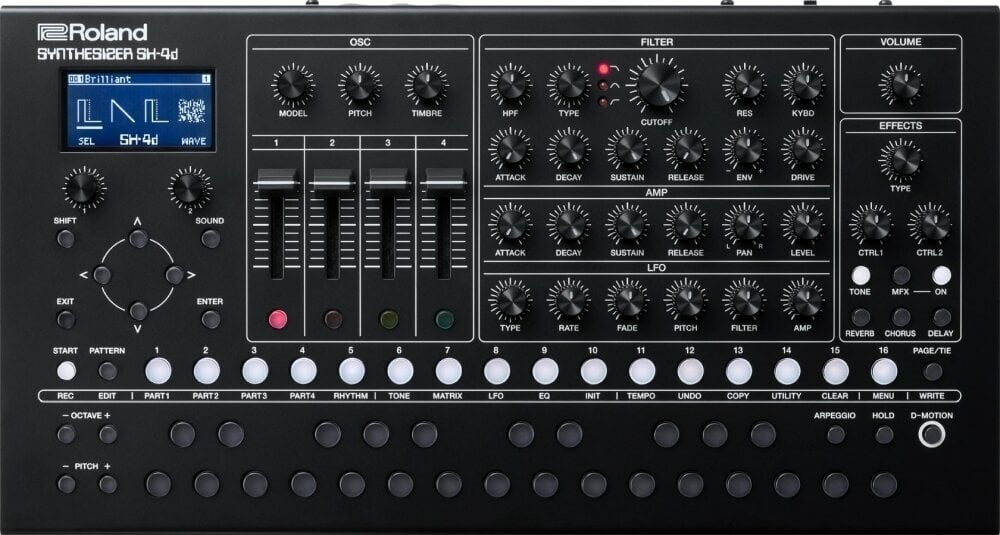
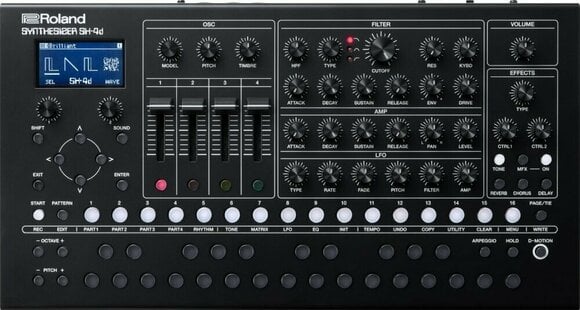
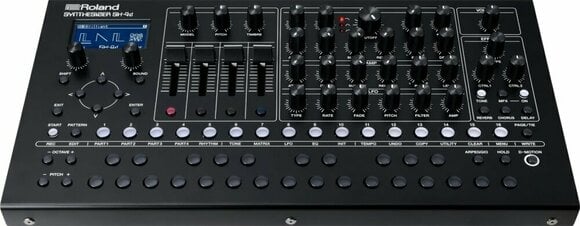
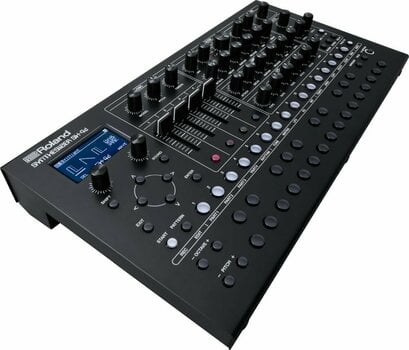

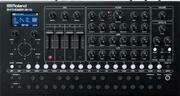
Roland SH-4D Sintetizador
The Roland SH-4D desktop synthesizer packs a 5-part multitimbral engine, 60-voice polyphony, and 11 OSC models into a portable battery-powered unit. It blends vintage analog-style sound with modern digital textures, including wavetable, cross FM, and the SH-101 and Juno-106 legacy voices. A built-in motion sensor, Visual Arpeggio, and 64-step sequencer make it equally suited for studio sound design and live performance.
- 5-part architecture with 4 synth parts plus a dedicated rhythm part running up to 26 instruments per kit
- 60-voice polyphony with per-part voice reservation for reliable multitimbral playback
- Multimode digital ladder filter with HPF, pre-filter Drive, and interactive Resonance
- Runs on USB-C bus power or 4 AA batteries for up to 4 hours of cable-free creation
Roland SH-4D Desktop Synthesizer — Five Parts, One Portable Groovebox
This desktop synthesizer and groovebox condenses a full multitimbral workstation into a unit small enough to run on AA batteries. Eleven OSC models span vintage analog-style tones, the SH-101 and Juno-106 legacy voices, cross FM, wavetable, ring modulation, sync, chord, drawing, and PCM sounds. With 60 voices of polyphony and a 64-step sequencer per part, this model lets a single hardware unit sketch, sequence, and perform a complete track.
What Sets the Instrument Apart
D-Motion is a built-in motion sensor that lets players tilt the unit to modulate two assignable parameters on the X/Y axis. Visual Arpeggio represents a physics-based mini-sequencer with five modes including bounce, bubble, sketch, pong, and orbit that generates note patterns through interactive on-screen animations. A dedicated Modulation Matrix routes LFOs, envelopes, and external MIDI sources to nearly any parameter, while the multimode digital ladder filter shapes every voice.
Synthesis Architecture — Polyphony and OSC Models
Polyphony and oscillator variety define how complex a track can become inside one box, with enough headroom for layered chords, stacked basslines, and full rhythm parts running simultaneously.
- The device offers 60 voices of maximum polyphony distributed across parts with per-part voice reservation.
- OSC Models: 11 engines — SH-4D, SH-3D, Sync, SH-101, Juno-106, Cross FM, Ring, Wavetable, Chord, Drawing, PCM
- Multitimbral Parts: 5 (4 synth + 1 rhythm) — independent sound design per part
Sequencer, Arpeggiator, and Performance Controls
Pattern sequencing and motion recording turn sound design into full arrangements without leaving the hardware.
- Sequencer Steps: 64 per part — with probability, flams, substeps, and motion recording across four lanes
- Arpeggiator: 5 types — plus the physics-based Visual Arpeggio for motion-driven patterns
- Pitch Bend: Yes — dedicated pitch bend buttons plus D-Motion tilt sensor for X/Y modulation
Effects Engine and Connectivity
A serious effects section and flexible I/O make this unit slot into studio racks, stage rigs, and mobile setups without compromise.
- Effects: Master Effect, Master EQ, Master Compressor, Reverb, Chorus, Delay — plus 93 MFX types across 5 systems
- Modulation: Modulation Matrix — routes LFOs, envelopes, and MIDI CCs to nearly any parameter
- Connectivity: USB-C, 5-pin MIDI I/O, 3.5 mm mix in, 1/4" stereo out, headphone out, clock input — plus 12 discrete USB audio channels to a DAW
Who the SH-4D Is Built For
It is the right choice for electronic producers, groovebox enthusiasts, and live performers who want deep sound design without menu-diving. Synthesists coming from Roland's ZenCore family will appreciate the simplified, hands-on engine layout, while hardware-first beatmakers gain a five-part workstation that runs on AA batteries for sketching on the road. DJs and live acts benefit from D-Motion tilt control and Visual Arpeggio, adding physical performance gestures. Studio producers can route the unit into a DAW over USB-C with 12 discrete audio channels.
Roland and the SH Heritage
Roland's SH series stretches back to the SH-101, a monophonic analog synth from 1982 that became a defining voice in early house, techno, and acid. The Juno-106, released in 1984, brought polyphony and the famous chorus effect to a generation of pop and electronic producers.
",description_sk:

Tipo
Desktop Synthesizer
LFO
Envelope
Sim
Osciladores
Modulação
Niveladores
Sim (4)
Arpejador
Tipos de efeitos
Reverb (9 x), Coro (5 x), Atraso (5 x), Master Effect (93 x), Master EQ, Master Compressor
Interface MIDI
Bluetooth
Altifalante incorporado
Organizador
Motor de áudio
Número de teclas
Tamanho da chave
Mini
Polifonia
Curva da altura tonal
Sim
Suporte de armazenamento
Ecrã
Tipo de ecrã
Cor
Saída para auscultadores
Entradas de pedais
Saídas analógicas
Entrada de microfone
USB
USB MIDI
USB para dispositivo
USB para anfitrião
Filtro
Sim
Sequenciador
Sim
Conteúdo da embalagem
Funcionamento da bateria
Tipo de bateria
AA
Fonte de alimentação
USB-C, Bateria
Largura (cm)
36
Altura (cm)
6,6
Profundidade (cm)
19,5
Peso líquido (kg)
1,78
Fabricado em
Malásia


Documentos
Instruções de utilização
Instruções de segurança
Consulta o manual do utilizador para obteres as instruções de segurança específicas para este artigo.



Garantia alargada de 3 anos

Devoluções até 30 dias

Garantia de preço

Mais de 3M de clientes

Apoio profissional