 Albânia
 Alemanha
 Argentina
 Austrália
 Brasil
 Bulgária
 Bélgica
 Bósnia e Herzegovina
 Canadá
 Chile
Chile
 Colômbia
 Croácia
 Dinamarca
 Eslovenia
 Eslováquia
 Espanha
 Estados Unidos da América
 Estônia
 Filipinas
 Finlândia
 França
 Grã Bretanha
 Grécia
 Hungria
 Irlanda
 Itália
 Letônia
 Lituânia
 Luxemburgo
 Macedónia do Norte
 Moldávia
 Montenegro
 México
 Noruega
 Nova Zelândia
 Países Baixos
 Polônia
 Portugal
 República Checa
 Romênia
 Suécia
 Suíça
Suíça
 Sérvia
 Turquia
 Ucrânia
 África do Sul
 Áustria







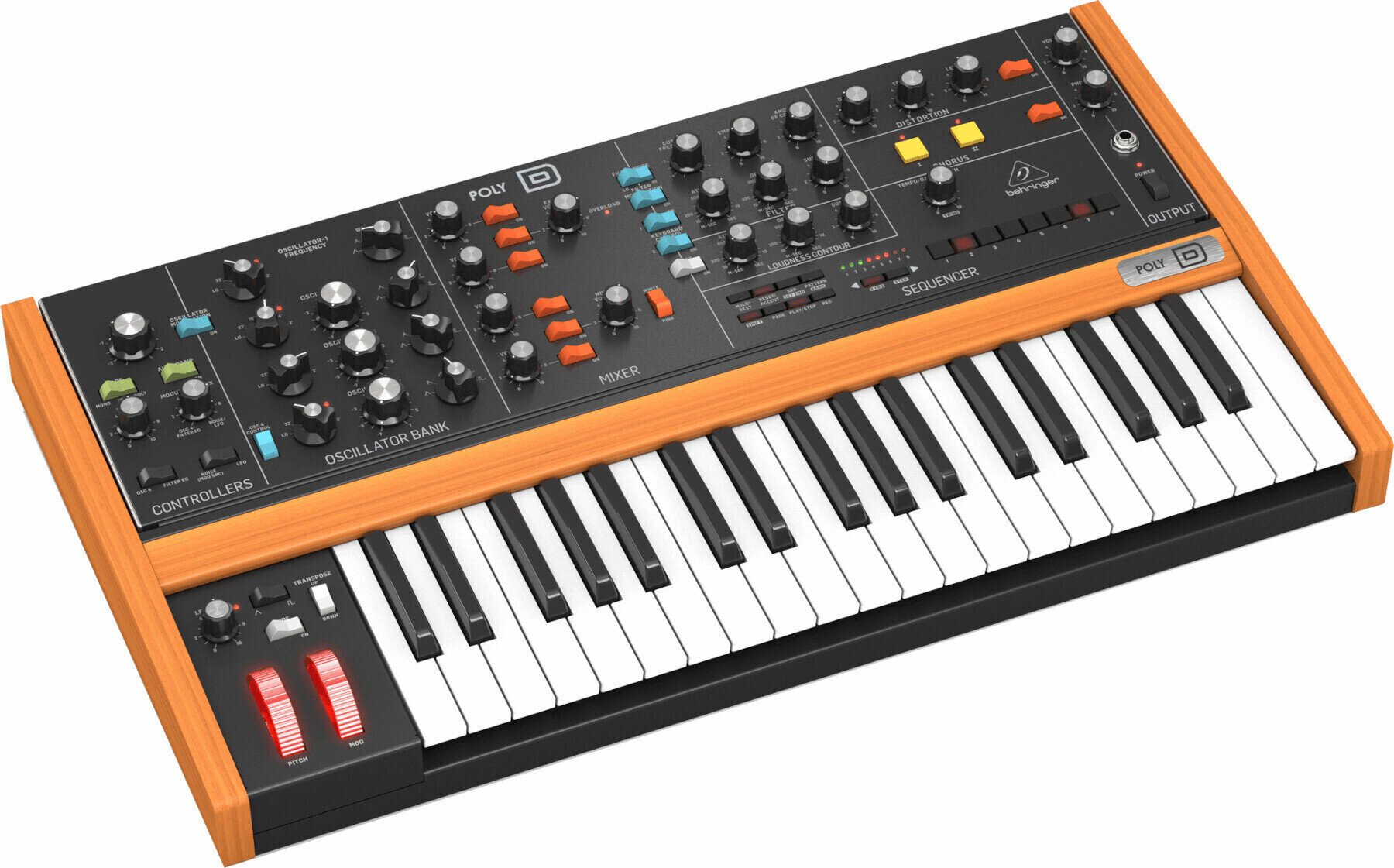
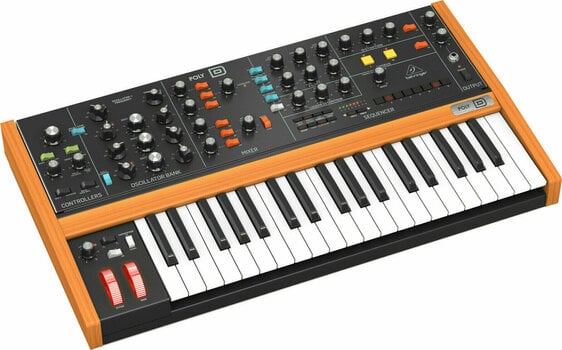
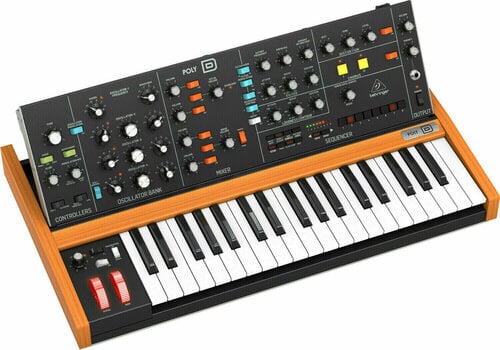
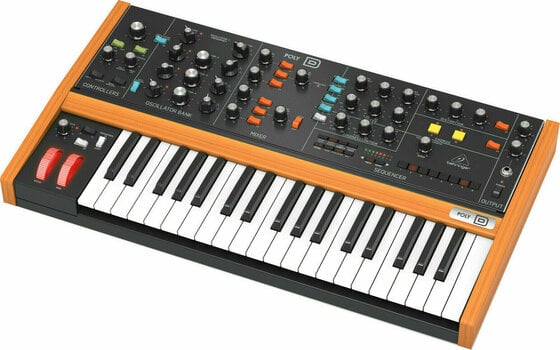

Behringer POLY D Sintetizador
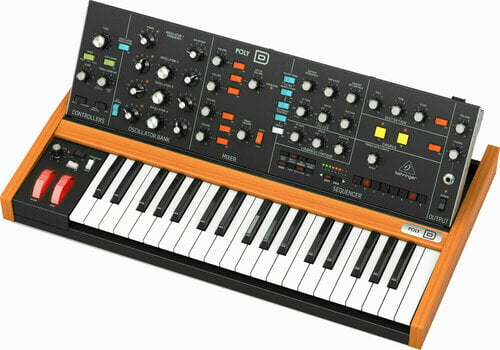
The Behringer POLY D is an analog 4-voice polyphonic synthesizer that pays tribute to the iconic 1971 Minimoog Model D while adding modern features like a fourth oscillator, BBD stereo chorus, and onboard sequencer. With 37 full-size velocity-sensitive keys, an authentic 24 dB ladder filter, and a pure analog signal path, it delivers the fat basses and searing leads that defined progressive rock and synth-pop. Switchable Mono, Poly, and Unison modes let one player cover everything from expressive solos to lush chord pads.
- Four independent analog VCOs with five selectable waveforms each, spanning a six-octave range for massive sound design flexibility.
- Classic 24 dB ladder filter with switchable low-pass and high-pass modes plus dedicated envelope shaping for vintage character.
- Built-in 32-step sequencer and arpeggiator with 64 patterns across 8 banks, ready for hands-off performance and studio work.
- J60-modeled BBD stereo chorus and DS1-modeled analog distortion add width and grit without external pedals.
Behringer POLY D Analog Polyphonic Synthesizer — Four Voices of Classic Analog Power
The Behringer POLY D is a 4-voice analog polyphonic synthesizer built around the legendary architecture of the 1971 Minimoog Model D, expanded with modern performance features for today's keyboardists. Its pure analog signal path runs through authentic VCO, VCF, VCA, and ladder filter circuits, giving players the same fat basses, blistering leads, and progressive organ tones that defined an era of music. The POLY D is the right choice for synthesists who want genuine analog sound and real-time knob-per-function control without menu diving.
Four VCOs, Three Modes, and a Ladder Filter at the Core
What separates the POLY D from a standard mono reissue is its fourth voltage-controlled oscillator and switchable Mono, Poly, and Unison modes, letting a single instrument cover expressive leads, four-note chord harmonies, and stacked unison thickness. The 24 dB ladder filter with switchable low-pass and high-pass operation, plus dedicated Attack, Decay, and Sustain envelope controls, sits at the heart of its sound. J60-modeled BBD stereo chorus and DS1-modeled analog distortion circuits are integrated directly into the signal path, expanding the tonal palette without external pedals.
Keyboard, Polyphony, and Performance Controls
The 37-key semi-weighted keyboard with full-size keys, velocity sensitivity, and aftertouch gives performers expressive control over dynamics and modulation in real time. Four voices of polyphony, combined with the dedicated modulation wheel, pitch wheel, and glide control, make this instrument equally suited to studio composition and live performance. Players can route aftertouch, velocity, pitch, and V-Trigger signals out through dedicated 1/4" jacks to interface with modular gear and external processors.
- Keys: 37 full-size, semi-weighted — full-size keys with velocity and aftertouch for expressive playing
- Polyphony: 4 voices — plus Mono and Unison modes for one-voice leads and stacked thickness
- Aftertouch: Yes (After Pressure) — dedicated output jack with sensitivity control
- Modulation: Pitch and Mod wheels, Glide — classic performance controls for bending and vibrato
Oscillators, Filter, and Sound Engine
Four analog voltage-controlled oscillators form the sound source, each offering five selectable waveforms across a six-octave range (LO, 32', 16', 8', 4', 2'). OSC 1, 2, and 3 share triangular, triangular/saw, saw, square, wide pulse, and narrow pulse options, while OSC 4 adds a reverse saw wave and can be switched out of keyboard control to act as a fifth modulation source. The 24 dB ladder filter with switchable low-pass and high-pass modes, plus dedicated envelope shaping, gives the POLY D its signature vintage character.
- Oscillators: 4 analog VCOs — five waveforms each, six-octave range for deep sound design
- Filter: 24 dB Ladder, switchable LP/HP — vintage Moog-style tone with adjustable Emphasis and Contour
- LFO: 1 triangle/square wave — for slow filter sweeps and rhythmic modulation effects
- Envelope: ADS — Attack, Decay, and Sustain shaping for both VCA and VCF
Sequencer, Effects, and Connectivity
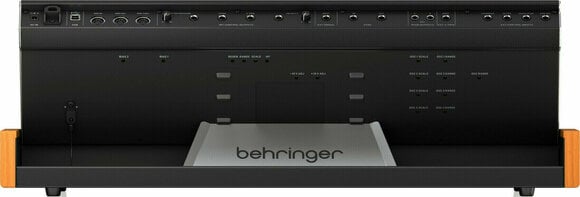
The onboard 32-step sequencer with 64 patterns across 8 banks, plus a built-in arpeggiator, makes the POLY D a self-contained performance and composition tool. Integrated BBD stereo chorus and analog distortion circuits add movement and grit without needing external effects. Full MIDI In/Out/Thru via both 5-pin DIN and USB Type B, plus dedicated control voltage inputs and outputs, allow deep integration with modular systems and DAW-based studios.
- Sequencer: 32 steps, 64 patterns, 8 banks — plus arpeggiator for generative performance
- Effects: BBD Stereo Chorus, analog Distortion — J60- and DS1-modeled circuits built into the signal chain
- MIDI: In/Out/Thru via USB and 5-pin DIN — class-compliant USB 2.0 for direct DAW integration
- Controls: 84 total knobs and switches — hands-on, menu-free operation
Who Is the Behringer POLY D For?
The POLY D is the right choice for synth players and producers who want classic analog tone with the flexibility of true polyphony at a working musician's price. It suits electronic music producers building basses and pads, learners exploring subtractive synthesis without menu diving, and live performers needing a road-ready instrument with wood-trimmed vintage aesthetics and 84 dedicated controls. Keyboardists coming from digital workstations will appreciate the immediate, hands-on workflow, while vintage synth enthusiasts get the ladder filter character and four-oscillator architecture that defined the original Model D era.
Behringer and the POLY D Story
Behringer was founded by Uli Behringer, born in 1961 in Baden, Switzerland, who built his first synthesizer, the UB-1, at age 17 before going on to establish the company. The POLY D draws directly on the 1970s portable analog synthesizer era, when artists like Jan Hammer, Chick Corea, Rick Wakeman, Jean-Michel Jarre, Isao Tomita, and Keith Emerson shaped the sound of progressive rock and electronic music. By adding a fourth oscillator, polyphonic capability, BBD chorus, distortion, and a 32-step sequencer to the original Model D concept, the POLY D brings that legacy into a modern performance instrument.

Tipo
Keyboard Synthesizer
Aftertouch
LFO
Envelope
ADS (2 )
Osciladores
Modulação
Arpejador
Interface MIDI
Bluetooth
Motor de áudio
Número de teclas
Tipo de teclado
Synth Action, Velocity sensitive
Tamanho da chave
Standard
Polifonia
Curva da altura tonal
Sim
Suporte de armazenamento
Saída para auscultadores
Entradas
Saídas
Entradas de pedais
USB MIDI
Filtro
Low Pass, High Pass
Sequenciador
Sim
Fonte de alimentação
Adaptador
Fonte de alimentação UK/UE incluída
Largura (cm)
64,7
Altura (cm)
8,9
Profundidade (cm)
36
Peso
11,5 kg
Peso líquido (kg)
10,2
Fabricado em
China


Todas as avaliações são feitas por clientes verificados que compraram um produto nosso.
Resumo das avaliações por IA
Com base no número de avaliações: 21
Pontos fortes
- Som Analógico Autêntico: Os clientes elogiam consistentemente a qualidade sonora do sintetizador, destacando sua grande semelhança com o Minimoog original e sua adequação para música analógica.
- Valor Excepcional: Muitos avaliadores ressaltam o preço acessível do produto, afirmando que ele oferece ótimo som e recursos pelo seu valor, tornando-o uma "melhor compra" para muitos.
- Qualidade de Construção: O sintetizador é descrito como tendo uma construção sólida e de alta qualidade, com componentes que transmitem uma sensação de robustez e encaixe perfeito.
- Modos de Reprodução Versáteis: O instrumento oferece modos polifônico e monofônico, com os clientes considerando o modo polifônico adequado para criar sons de pads e o modo monofônico comparável a um Minimoog com vozes adicionais.
- Sequenciador Poderoso: O sequenciador integrado aprimora significativamente os recursos do dispositivo, embora alguns usuários considerem sua operação complexa.
Pontos fracos
- Problemas de Qualidade de Construção: Alguns usuários relataram problemas com a qualidade física, como chaves rotativas soltas e peças decorativas faltando na chegada, sugerindo um controle de qualidade inconsistente.
- Interface de Usuário Complexa: A operação do sequenciador é considerada complicada, e o manual do usuário é considerado pouco útil para iniciantes, tornando a curva de aprendizado íngreme para alguns recursos.
- Controle Limitado do Chorus: O efeito de chorus, embora geralmente apreciado, carece de parâmetros ajustáveis como controle de sinal original/processado, e a segunda configuração de chorus é considerada excessiva.
O que os clientes repetem
Veredito
Documentos
Instruções de utilização
Informações sobre o fabricante
Instruções de segurança
Consulta o manual do utilizador para obteres as instruções de segurança específicas para este artigo.


Garantia alargada de 3 anos

Devoluções até 30 dias

Garantia de preço

Mais de 3M de clientes

Apoio profissional