 Albânia
 Alemanha
 Argentina
 Austrália
 Brasil
 Bulgária
 Bélgica
 Bósnia e Herzegovina
 Canadá
 Chile
Chile
 Colômbia
 Croácia
 Dinamarca
 Eslovenia
 Eslováquia
 Espanha
 Estados Unidos da América
 Estônia
 Filipinas
 Finlândia
 França
 Grã Bretanha
 Grécia
 Hungria
 Irlanda
 Itália
 Letônia
 Lituânia
 Luxemburgo
 Macedónia do Norte
 Moldávia
 Montenegro
 México
 Noruega
 Nova Zelândia
 Países Baixos
 Polônia
 Portugal
 República Checa
 Romênia
 Suécia
 Suíça
Suíça
 Sérvia
 Turquia
 Ucrânia
 África do Sul
 Áustria








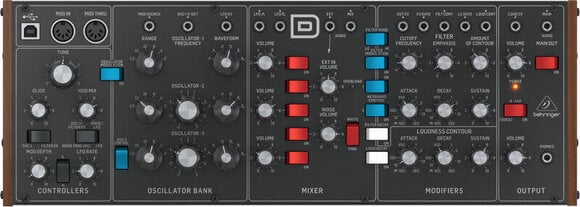
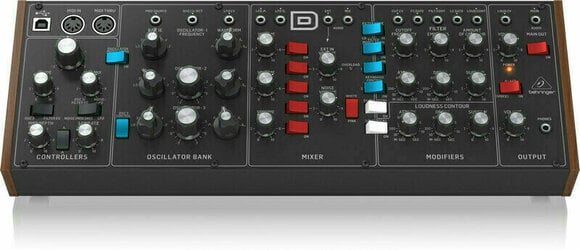
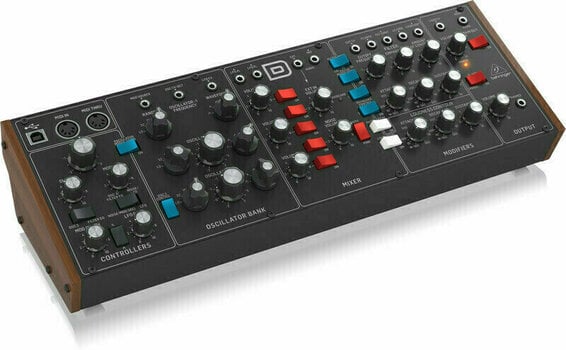
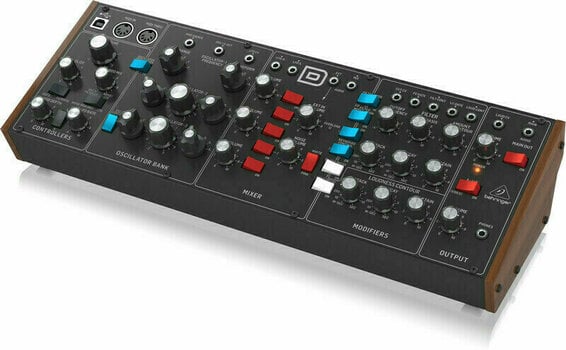
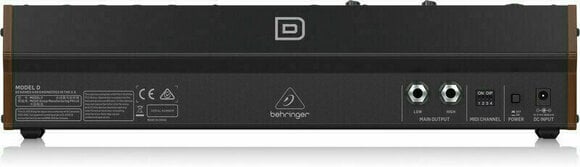
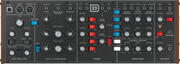
Behringer Model D Sintetizador
Esta descrição foi gerada de maneira automática por Software de tradução:
Sintetizador Analógico com 3 VCOs, Filtros Ladder, LFO e Formato Eurorack. A década de 1970 gerou o primeiro sintetizador analógico verdadeiramente portátil, e embora tenha sido rapidamente adotado por muitos artistas musicais renomados, incluindo Jan Hammer, Chick Corea, Rick Wakeman, Jean-Michel Jarre, Isao Tomita e Keith Emerson, para citar alguns, foi um pouco temperamental e muito caro. Uma homenagem ultra-acessível a esse sintetizador icônico, com todos os recursos do original e, em seguida, alguns, o BEHRINGER MODEL D permite que você conjure praticamente qualquer som monofônico imaginável com incrível elegância e facilidade. O caminho do sinal analógico puro é baseado em projetos autênticos de VCO, VCF, VCA e filtros de escada em conjunto com um LFO de triângulo / onda quadrada dedicado e totalmente analógico. E quando se trata de proteção e conveniência, o MODELO D pode até ser montado em um padrão Eurorack, tornando-o ideal para o estúdio e / ou a estrada. Possuir um MODELO D é como ter sua própria máquina do tempo, permitindo que você abraça livremente o passado - ou molda o futuro! Sintetizador analógico legendário com design triplo VCO permite criação de música insanamente gorda, reprodução autêntica de circuitos "tipo D" originais com transistores e JFETs combinados, resistores de filme fino 0,1% de precisão ultra-alta e capacitores de sulfeto de polifenileno, caminho de sinal analógico puro VCO, VCF e VCA, 5 osciladores variáveis com larguras de pulso variáveis para sons extremos, filtro ladder clássico de 24 dB com ressonância para desempenho sonoro lendário, modo de filtro passa baixa / alta selecionável para criação aprimorada de som, triângulo / quadrado dedicados e totalmente analógicos onda LFO, cadeia Poly de 16 vozes permite combinar múltiplos sintetizadores para até 16 polifonias de voz, design semi-modular não requer patch para desempenho imediato, circuito Overdrive acrescenta tempero insano e borda aos seus sons, gerador de ruído expande dramaticamente geração de forma de onda, Complete Eurorack solução - o módulo principal pode ser transferido para um gabinete padrão da Eurorack, 48 controles e acesso em tempo real a todos os parâmetros importantes, entrada de áudio externa para processamento de fontes de som externas, saídas de nível baixo e alto apresentando os mais altos estágios de sinal de integridade de sinal, implementação MIDI abrangente com canal MIDI e seleção de Prioridade de Voz.
Behringer Model D Analog Synthesizer — Classic Moog Voice, Modern Price
The Behringer Model D is an authentic analog monophonic synthesizer designed as an ultra-affordable homage to the iconic 1970s Minimoog Model D. Its pure analog signal path is built around three voltage-controlled oscillators, a 24 dB ladder filter, a dedicated VCA, and a fully analog triangle/square wave LFO. The Model D is the right choice for producers, sound designers, and performing keyboardists who want the unmistakable fat bass and lead tones of a vintage Moog without paying vintage prices.
What Sets the Model D Apart in the Analog Synth Category
Few modern analog synths at this price point offer a true Eurorack-compatible chassis, and the Model D ships in a 70HP "boat" case that drops straight into a standard rack. The 24 dB ladder filter is dual-mode, providing both the expected low-pass response and a high-pass mode that the original Minimoog never had, opening up new timbral territory. A built-in feedback loop routes the main output back into the external audio input when nothing is patched in, letting players dial in everything from subtle thickening to aggressive saturation without extra cables.
Oscillator Architecture — The Heart of the Sound
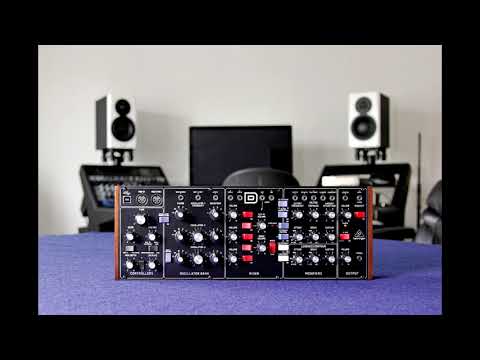
The three-oscillator architecture is what gives the Model D its famously thick, punchy character. Oscillators 1 and 2 each offer six waveforms (triangle, triangle/saw, saw, square, wide pulse, narrow pulse), while OSC 3 swaps the triangle/saw for a reverse saw, making it equally useful as an audio source or as a sub-audio modulation source.
- Oscillators: 3 analog VCOs — the foundation of the classic Moog stack sound
- Waveforms per OSC: 6 selectable shapes — broad timbral range from soft triangles to aggressive pulse waves
- Octave Range: LO, 32', 16', 8', 4', 2' — six octaves of coverage from sub-bass to high leads
- Detune Range: approx. ±7 semitones (OSC 2 and OSC 3) — for everything from gentle chorus to dissonant intervals
Filter, Envelopes, and Modulation — Shaping Every Note
The 24 dB ladder filter is the soul of the instrument, capable of self-oscillation down to 64 Hz and offering switchable low-pass and high-pass modes. Independent ADS(D) envelope generators shape both the filter cutoff and the VCA, with the loudness contour offering a maximum attack of around 11 seconds and a release of roughly 22 seconds. Five modulation sources — OSC 3, filter envelope, noise, external input, and the dedicated LFO — can be mixed and routed to either oscillator pitch or filter cutoff.
- Filter: 24 dB/oct ladder, switchable LP/HP — self-oscillating resonance with classic Moog character
- Envelopes: 2× ADS(D) (filter + loudness) — independent gate inputs for advanced patching
- LFO: 1 analog triangle/square wave — switchable rate, depth, and modulation routing
- Noise Generator: switchable pink/white — adds air, grit, or percussion-style sounds
Connectivity, Build, and Poly Chain — Studio and Stage Ready
The Model D weighs less than 2 kg and packs 29 knobs and 19 switches into a compact 374 × 136 mm panel. MIDI I/O and Thru are available over both USB and traditional DIN, and a dedicated headphone output with its own volume control sits on the front panel. The semi-modular patch bay exposes 3.5 mm jacks for pitch CV, LFO frequency, filter cutoff, amplifier gain, envelope gates, and external modulation, while the Poly Chain function links up to 16 units for full polyphonic performance.
- Poly Chain: up to 16 voices — combine multiple units for true polyphony
- MIDI: USB + DIN In/Out/Thru — works with any modern DAW or hardware controller
- Patch Bay: 3.5 mm semi-modular jacks — interfaces with Eurorack and external CV gear
- Headphone Output: yes, with dedicated volume — silent practice without an audio interface
- Power: external 12V DC — keeps the analog circuitry isolated from digital noise
Who the Behringer Model D Is For
The Behringer Model D is the right choice for electronic musicians, hip-hop and synthwave producers, and live performers who need authoritative analog bass and lead tones at a price that fits any project studio. Sound designers will appreciate the semi-modular patch bay and Eurorack compatibility for integrating the synth into a larger modular system. Beginners stepping into analog synthesis for the first time will find the intuitively linear workflow approachable, with no patching required for immediate play. Players who already own a Minimoog Model D or a Moog reissue can use the Model D as a portable, road-ready backup that captures the same sonic DNA.
Behringer and the Model D Story
Behringer was founded by Uli Behringer, who grew up in a musical family in Baden, Switzerland and built his first synthesizer at the age of 17. The Model D pays tribute to the Minimoog Model D that defined progressive rock, wave, and synth-pop in the 1970s and '80s, an instrument championed by Jan Hammer, Chick Corea, Rick Wakeman, Jean-Michel Jarre, Isao Tomita, and Keith Emerson. By recreating that legendary architecture with matched transistors, JFETs, and 0.1% thin-film resistors, Behringer has made one of synthesis history's most coveted voices accessible to a new generation of players.

Tipo
Desktop Synthesizer, Semi-modular
Aftertouch
LFO
Envelope
Sim
Osciladores
Modulação
Arpejador
Tipos de efeitos
Interface MIDI
Bluetooth
Motor de áudio
Curva da altura tonal
Não
Suporte de armazenamento
Cor
Saída para auscultadores
Saídas
Entradas de pedais
USB MIDI
USB para anfitrião
Filtro
Low Pass, High Pass
Sequenciador
Não
Fonte de alimentação
Adaptador
Fonte de alimentação UK/UE incluída
Largura (cm)
37,4
Altura (cm)
9
Profundidade (cm)
13,6
Peso líquido (kg)
1,7
Fabricado em
China


Todas as avaliações são feitas por clientes verificados que compraram um produto nosso.
Resumo das avaliações por IA
Com base no número de avaliações: 26
Pontos fortes
- Qualidade de Som: Os clientes destacam consistentemente o som excepcional, especialmente os graves potentes, observando como ele se integra bem à mixagem.
- Custo-Benefício: Muitos usuários ficam impressionados com a qualidade oferecida pelo preço, considerando-o um excelente investimento.
- Facilidade de Uso: O sintetizador é apreciado por seus controles intuitivos, que eliminam a necessidade de navegar por menus e proporcionam uma sensação retrô.
- Design Compacto: Seu tamanho reduzido é uma grande vantagem, tornando-o uma opção que economiza espaço para os usuários.
Pontos fracos
- Curva de Aprendizagem para Iniciantes: Alguns novos usuários podem achar o processo inicial de aprendizagem desafiador, embora se torne agradável com a prática.
O que os clientes repetem
Veredito
Documentos
Instruções de utilização
Informações sobre o fabricante
Instruções de segurança
Consulta o manual do utilizador para obteres as instruções de segurança específicas para este artigo.


Garantia alargada de 3 anos

Devoluções até 30 dias

Garantia de preço

Mais de 3M de clientes

Apoio profissional