 Albânia
 Alemanha
 Argentina
 Austrália
 Brasil
 Bulgária
 Bélgica
 Bósnia e Herzegovina
 Canadá
 Chile
Chile
 Colômbia
 Croácia
 Dinamarca
 Eslovenia
 Eslováquia
 Espanha
 Estados Unidos da América
 Estônia
 Filipinas
 Finlândia
 França
 Grã Bretanha
 Grécia
 Hungria
 Irlanda
 Itália
 Letônia
 Lituânia
 Luxemburgo
 Macedónia do Norte
 Moldávia
 Montenegro
 México
 Noruega
 Nova Zelândia
 Países Baixos
 Polônia
 Portugal
 República Checa
 Romênia
 Suécia
 Suíça
Suíça
 Sérvia
 Turquia
 Ucrânia
 África do Sul
 Áustria







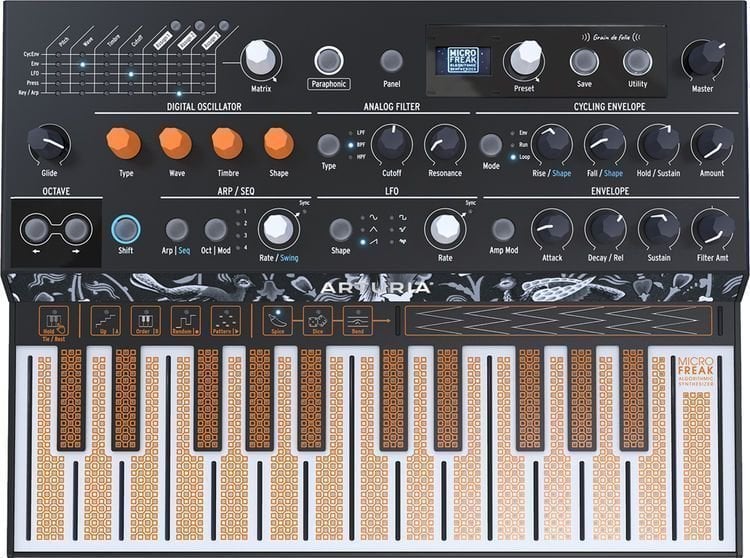
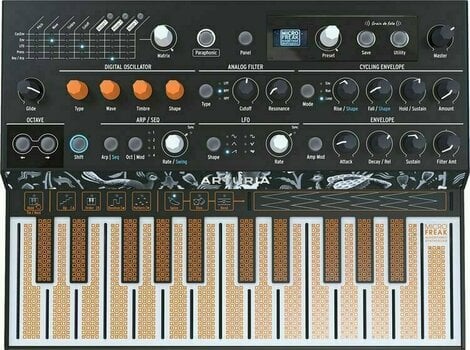
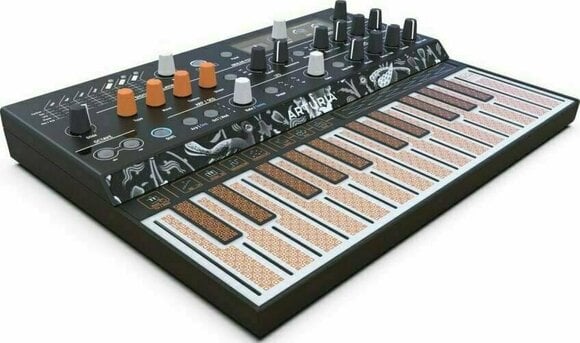




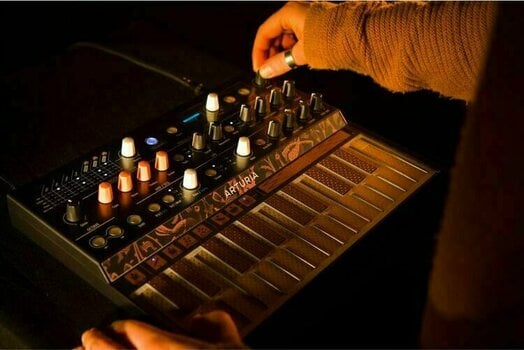

Arturia Microfreak Sintetizador
The Arturia MicroFreak is a hybrid hardware synthesizer that pairs a multi-algorithm digital oscillator with an analog SEM-style filter, all played through a flat 25-key capacitive PCB keybed with polyphonic aftertouch. It packs 21 oscillator modes, a 64-step sequencer with four automation lanes, and a 5×7 modulation matrix into a 1.02 kg chassis that runs from USB power.
- 21 digital oscillator modes covering wavetable, Karplus-Strong, virtual analog, granular, speech synthesis, and a vocoder
- Analog 12 dB/octave state-variable filter inspired by the classic SEM design, with self-oscillation
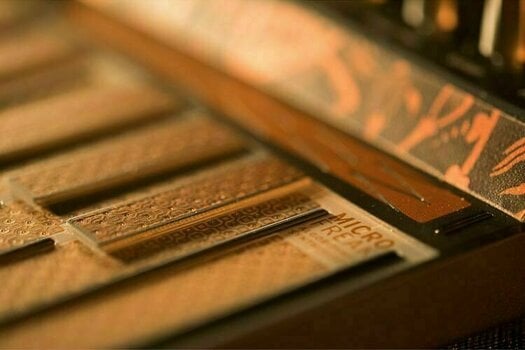
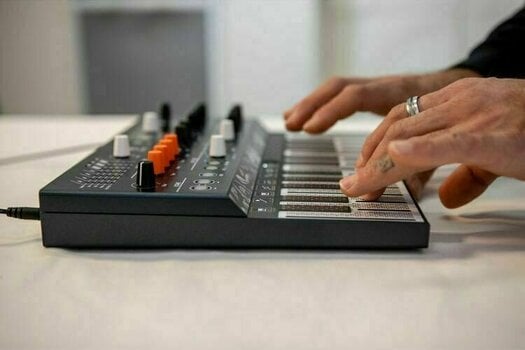
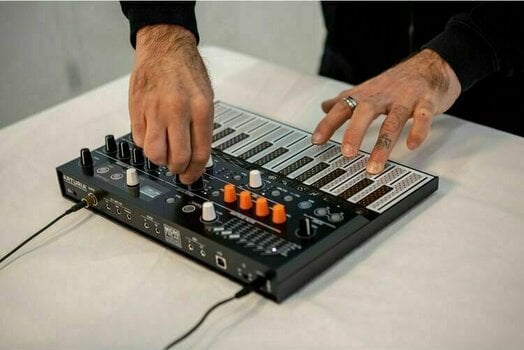
- 25-key flat capacitive keybed with polyphonic aftertouch for per-key expressive control
- 64-step sequencer with Spice & Dice randomizers and four parameter automation tracks per preset
- Compact 1.02 kg body powered via USB, with CV/Gate, MIDI, and clock I/O for studio and stage setups
Arturia MicroFreak Hybrid Synthesizer — A 25-Key Capacitive Keybed Meets 21 Digital Oscillator Modes
\nThe Arturia MicroFreak is an experimental hybrid synthesizer that fuses a multi-algorithm digital oscillator engine with a true analog SEM-style filter, all driven by a flat capacitive PCB keybed. This model gives producers, sound designers, and live performers a single compact instrument capable of wavetable, virtual analog, granular, physical modeling, and speech synthesis tones. With 21 oscillator modes, polyphonic aftertouch, and a 64-step sequencer, this synth delivers an unusually wide sonic palette for its size and price tier.
\nStandout Features: A Capacitive Keybed, a Hybrid Engine, and a Mod Matrix
\nWhat separates the unit from conventional hardware synths is its flat, touch-sensitive 25-key capacitive PCB keybed that registers both velocity and polyphonic aftertouch based on the firmness and surface area of finger contact. The hybrid architecture routes a fully digital oscillator through a 12 dB/octave analog state-variable filter inspired by the classic Oberheim SEM, capable of low-pass, band-pass, and high-pass operation with self-oscillation. A 5-source by 7-destination modulation matrix with three user-defined routings, plus Spice and Dice randomizers in the sequencer, lets adventurous players generate patterns that surprise even the person programming them.
\nOscillator Engine — 21 Modes, One Instrument
\nThe digital oscillator is the heart of this synth and the reason it can sound like dozens of different synths in a single preset. Modes range from Basic Waves and Virtual Analog through Wavetable, Karplus-Strong physical modeling, Harmonic additive synthesis, and three granular engines, with seven algorithms adapted from Mutable Instruments' Plaits and three co-designed with Noise Engineering.
\n- \n
- Oscillator modes offer 21 digital algorithms covering wavetable, virtual analog, FM, granular, speech, vocoder, and physical modeling in one engine. \n
- Polyphony: monophonic, paraphonic, or unison up to 4 voices — switchable architecture for leads, stacked basses, or four-note chords \n
- Filter: analog 12 dB/octave state-variable LPF/BPF/HPF — SEM-inspired circuit that can self-oscillate for squelchy resonance \n
Keyboard & Expression — Polyphonic Aftertouch on a Flat PCB
\nThe 25-key capacitive keybed is its most divisive and most expressive feature. Each key senses pressure through the contact area of the fingertip, so rolling a finger flatter increases the aftertouch value, opening the door to per-note modulation that traditional moving keys cannot match.
\n- \n
- Keys Number: 25 capacitive PCB keys — flat, rugged, and immune to mechanical wear from transport \n
- Keyboard Type: Touch-Sensitive Capacitive Keybed — registers velocity from the moment of contact \n
- Aftertouch: polyphonic — each of the 25 keys can drive a different modulation target simultaneously \n
Sequencer, Modulation & Connectivity — Built for the Studio and the Stage
\nBeyond the oscillator and keybed, this instrument ships with a deep performance sequencer and a flexible modulation system that turns the front panel into a patchable playground. The 64-step sequencer stores two patterns per preset and four lanes of parameter automation, while the cycling envelope can act as either an envelope or a second LFO with variable rise and fall times.
\n- \n
- Sequencer: 64-step polyphonic sequencer with 4 automation tracks — long enough for full four-bar phrases with evolving parameter motion \n
- Envelope: ADSR plus Cycling Envelope — main ADSR shapes amplitude, while the cycling modulator doubles as envelope or LFO \n
- LFO: 1 LFO with Sine, Tri, Saw, Square, Random, and Slew Random shapes — syncable for tempo-locked movement \n
- Modulation: 5 sources × 7 destinations matrix with 3 user slots — virtually rewire the signal chain without cables \n
- Preset Memory: 512 slots including 320 factory presets — generous storage for both stock and user patches \n
- I/O: USB, MIDI in/out, CV/Gate/Pressure, analog clock in/out — integrates with DAWs, Eurorack, and vintage hardware \n
- Power: USB or included PSU — low-voltage digital oscillators mean no bulky power brick required \n
Who Is It For — Producers, Sound Designers, and Live Performers
\nThe MicroFreak is the right choice for electronic producers, sound designers, and live performers who want a hybrid synth that can morph between wavetable leads, Karplus-Strong plucks, granular textures, and analog-filtered basses without switching instruments. Bedroom producers benefit from the 64-step sequencer with Spice and Dice randomizers, which can generate evolving patterns even when inspiration is low. Modular players will appreciate the CV/Gate and Pressure outputs that let the unit drive Eurorack voices, while the polyphonic aftertouch keybed makes it a capable controller for software instruments in a DAW. At 1.02 kg and USB-powered, it travels easily to gigs, jam sessions, and studio setups where space is tight.
\nBrand & Product Story — Arturia's Hybrid Mutiny
\nArturia built this instrument as a deliberate departure from the analog monosynth trend, blending digital oscillator algorithms borrowed from Mutable Instruments' open-source Plaits engine with a true analog SEM-style filter. The instrument carries the phrase \"Grain de folie\" — a touch of madness — on its front panel, signaling its experimental intent. Since launch, ongoing firmware updates have expanded the oscillator count from the original 12 modes to 21, adding sample playback, granular processing, and a vocoder.
",description_sk:

Tipo
Desktop Synthesizer
Aftertouch
LFO
Envelope
ADSR (1 ), Cycling Envelope
Osciladores
Modulação
Arpejador
Tipos de efeitos
Número de predefinições
Interface MIDI
Bluetooth
Motor de áudio
Número de teclas
Tipo de teclado
Polyphonic Aftertouch, Touch-Sensitive Capacitive Keybed
Tamanho da chave
Standard
Polifonia
Curva da altura tonal
Não
Suporte de armazenamento
Cor
Saída para auscultadores
Entradas
Entradas de pedais
USB MIDI
USB para dispositivo
USB para anfitrião
Filtro
Analog State Variable Filter, 12dB/Octave, Low Pass, High Pass, Band Pass
Sequenciador
Sim
Fonte de alimentação UK/UE incluída
Largura (cm)
31,1
Altura (cm)
5,5
Profundidade (cm)
23,3
Peso
1 kg
Peso líquido (kg)
1,02
Fabricado em
China


Todas as avaliações são feitas por clientes verificados que compraram um produto nosso.
Resumo das avaliações por IA
Com base no número de avaliações: 54
Pontos fortes
- Versatilidade sonora: Os clientes apreciam a ampla gama de possibilidades sonoras devido ao seu oscilador exclusivo e aos diversos tipos de osciladores disponíveis, permitindo ampla experimentação e criação de sons.
- Portabilidade e tamanho: O sintetizador se destaca por seu design leve e compacto, facilitando o transporte para apresentações ao vivo ou para a criação musical em qualquer lugar.
- Teclado exclusivo: O teclado capacitivo não tradicional é um dos seus principais diferenciais, oferecendo novas possibilidades sonoras e uma experiência física envolvente ao tocar.
- Custo-benefício: Muitos clientes consideram este sintetizador um excelente investimento, oferecendo alta qualidade e diversos recursos a um preço acessível.
- Alimentação USB: A possibilidade de alimentar o dispositivo via USB, incluindo power banks, é um recurso prático que aumenta sua portabilidade e usabilidade.
Pontos fracos
- Problemas de conectividade USB: Alguns usuários relataram problemas ocasionais com a conectividade USB no macOS, exigindo a reinicialização do dispositivo para restabelecer a conexão.
- Ausência de efeitos integrados: A ausência de efeitos integrados é apontada como uma limitação, embora os clientes sugiram que isso pode ser facilmente compensado com softwares ou pedais externos.
O que os clientes repetem
Veredito
Documentos
Instruções de utilização
Informações sobre o fabricante
Instruções de segurança
Consulta o manual do utilizador para obteres as instruções de segurança específicas para este artigo.

Garantia alargada de 3 anos

Devoluções até 30 dias

Garantia de preço

Mais de 3M de clientes

Apoio profissional